Are black dwarf stars real? Black dwarfs are real in that they are hypothetical objects which astronomers presume will exist in the future. However, they certainly don’t exist now and probably won’t for quite some time to come.
Let’s proceed with some background information:
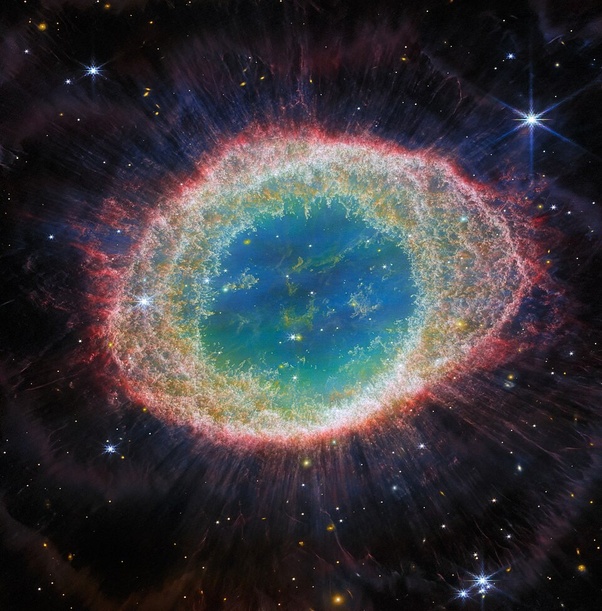
Black dwarfs are the presumed end products of white dwarfs, the remnants produced when lower mass stars (up to eight solar masses) exhaust their core fuel reserves and cast their outer layers away as planetary nebula. As these white dwarfs cool, their luminosity decreases. When they attain a sufficiently low surface temperature, lower than 5K, they would produce so little radiation that they could be considered black dwarfs.

White dwarfs are quite hot when they first form, with temperatures often greater than 150,000 K. (The surface temperature of RX J0439.8−6809, the hottest known white dwarf, equals approximately 250,000 K (449,540 °F/249727 °C.) As white dwarfs wick away their thermal energy through the painfully slow radiational cooling process, they would need a time period far greater than the current age of the Universe in order to become a “black dwarf.” The actual amount of time, which would vary for white dwarf stars of varying masses, remains uncertain. John D. Barrow and Frank J Tipler estimate that a white dwarf could cool down to form a black dwarf in approximately 10¹⁵ years, almost 725,000 times greater than the current age of the Universe. Other factors, such as the heat release from proton decay, interactions with weakly interacting massive particles (WIMPS) could possibly increase this timeline considerably. We should note here that bodies with even a minute amount of thermal energy will still produce some radiation.
So, none of these ultra-cooled black dwarfs exist simply because not enough time has elapsed in order for them to cool down to this state.
The “coolest” white dwarf yet discovered, a binary companion to the pulsar PSR J2222-0137, has a surface temperature of about 3,000 K: frigid by white dwarf standards, but still nowhere near the level of a black dwarf. This white dwarf has cooled to such an extent simply because of its age: approximately 11 billion years. Trillions of more years will need to elapse before even this remnant approaches the black dwarf stage.

Although some might consider this remnant to be a “black dwarf” because it emits only a feeble amount of visible light, by conventional “black dwarf” definitions, it is still classified as a white dwarf, albeit an exceptionally cool one.


Leave a Reply