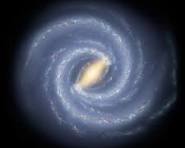
Yes, you are correct: we are orbiting around the Sun while the Sun, itself, moves through the galaxy, although the Sun does not occupy the galactic center but is instead located about 25,700 light years from it. See the image below. Moreover, we are moving approximately 143 miles per second relative to the nucleus and the stars in the Sun’s vicinity are moving at comparable speeds. At this rate, the solar sysem completes one orbit around the galaxy every 225 million years.

The artistic depiction of the Milky Way featured above shows the approximate location of the Sun within its host galaxy. The Sun moves through the galaxy at approximately 143 miles per second. Located at a distance of 25,700 light years, the Sun completes one revolution around the galactic center every 225 million years. (Note: Unfortunately, we have no means by which to capture external images of our home galaxy.)
As a consequence of these proper stellar motions, the constellations will change, albeit over long time periods. The star patterns we observe today are essentially the same as were seen at the beginning of recorded human history (around the 4th millennium BCE: disputed.) Throughout a human lifetime, the constellations remain the same. However, if we lived for tens of thousands of years, we would eventually notice alterations in these patterns.
Notice the images below. The top sequence shows how the Big Dipper appeared in the past, how it appears today and how it will appear in the future. The bottom sequence shows the same changes that have and will occur to the constellation Orion.

Over very long time periods (on the order of millions of years) the stars comprising the constellations we observe today will move out of our view or perish. As the Sun moves into distant regions of the galaxy, other stars will become visible and new constellations will adorn our sky. Of course, most of the stars we see in the sky now will remain in view for tens or hundreds of thousands of years.


Leave a Reply