The mechanism that forms a moonbow is precisely the same as that which forms a rainbow. Light enters a raindrop at just the right angle so that its light is initially refracted. The light is then reflected at the “back” of the drop and then is refracted again. As the colors within the light are at different wavelengths, the light leaves the drop along various angles, producing the continuous spectrum that we perceive as a rainbow, or, in this case, a moonbow.

While we can generally observe the different colors within a rainbow quite easily, a moonbow appears white, even though the moonbow consists of the same continuous spectrum. The colors are still there, but we can’t discern these colors because our eyes have limitations.

Since our cone cells function best under bright light, we can easily distinguish colors when the light is sufficiently intense. However, when the light is low, the rod cells become dominant and we perceive only a whitish light.
However, in the time exposure photo of a moonbow below, we can actually discern different colors. Although it still doesn’t appear as vibrant as a rainbow, we can readily observe the continous spectrum within the moonbow.

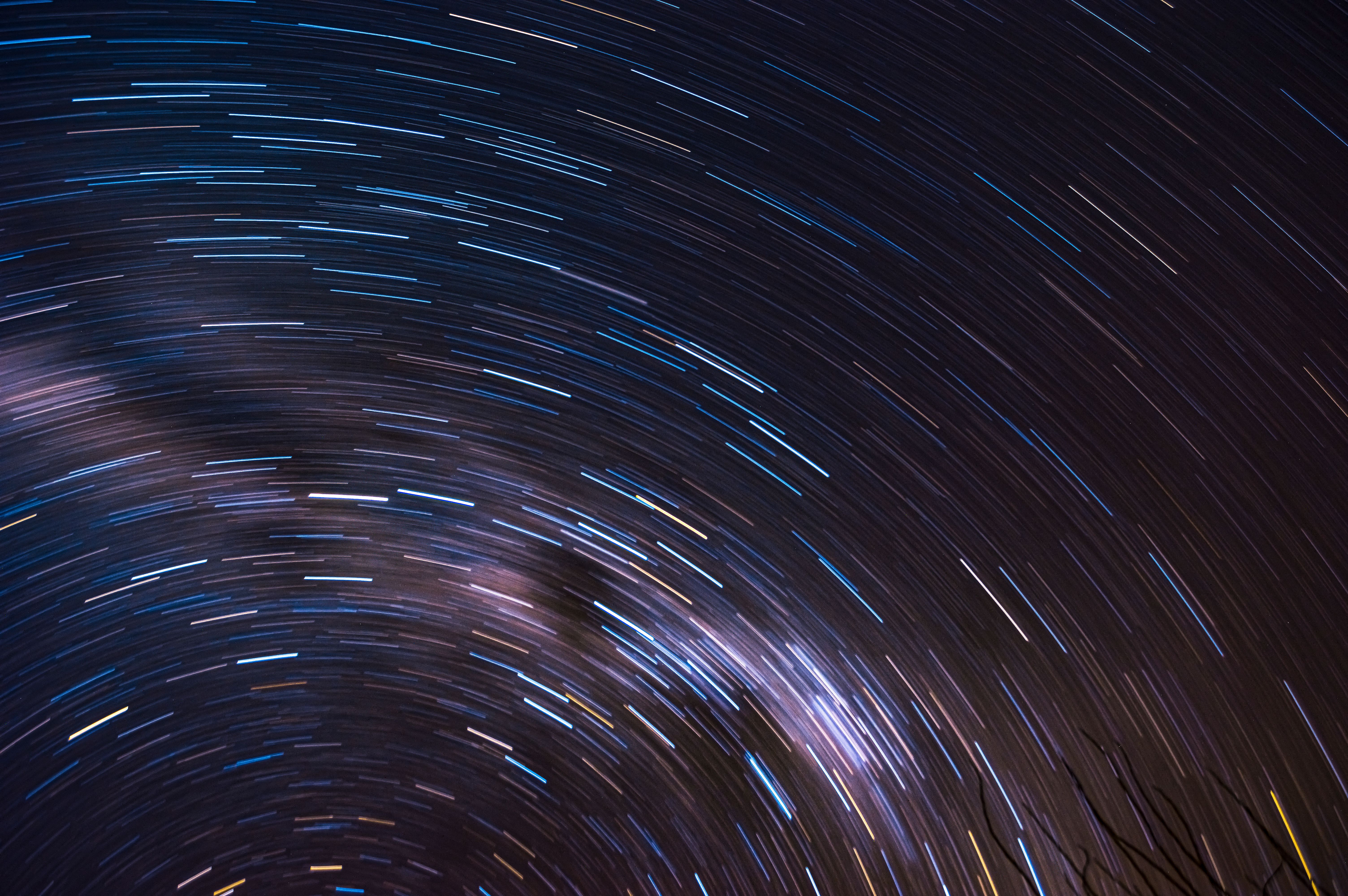
Another example of this lack of color perception is the night sky, itself. Even though the stars generally appear as non-descript white points to our naked eyes, the night sky, as seen in the time exposure photo below, is vibrantly alive with color.

As beguilingly beautiful as the cosmos might seem to us, it is profoundly lovelier than we can even perceive.


Leave a Reply