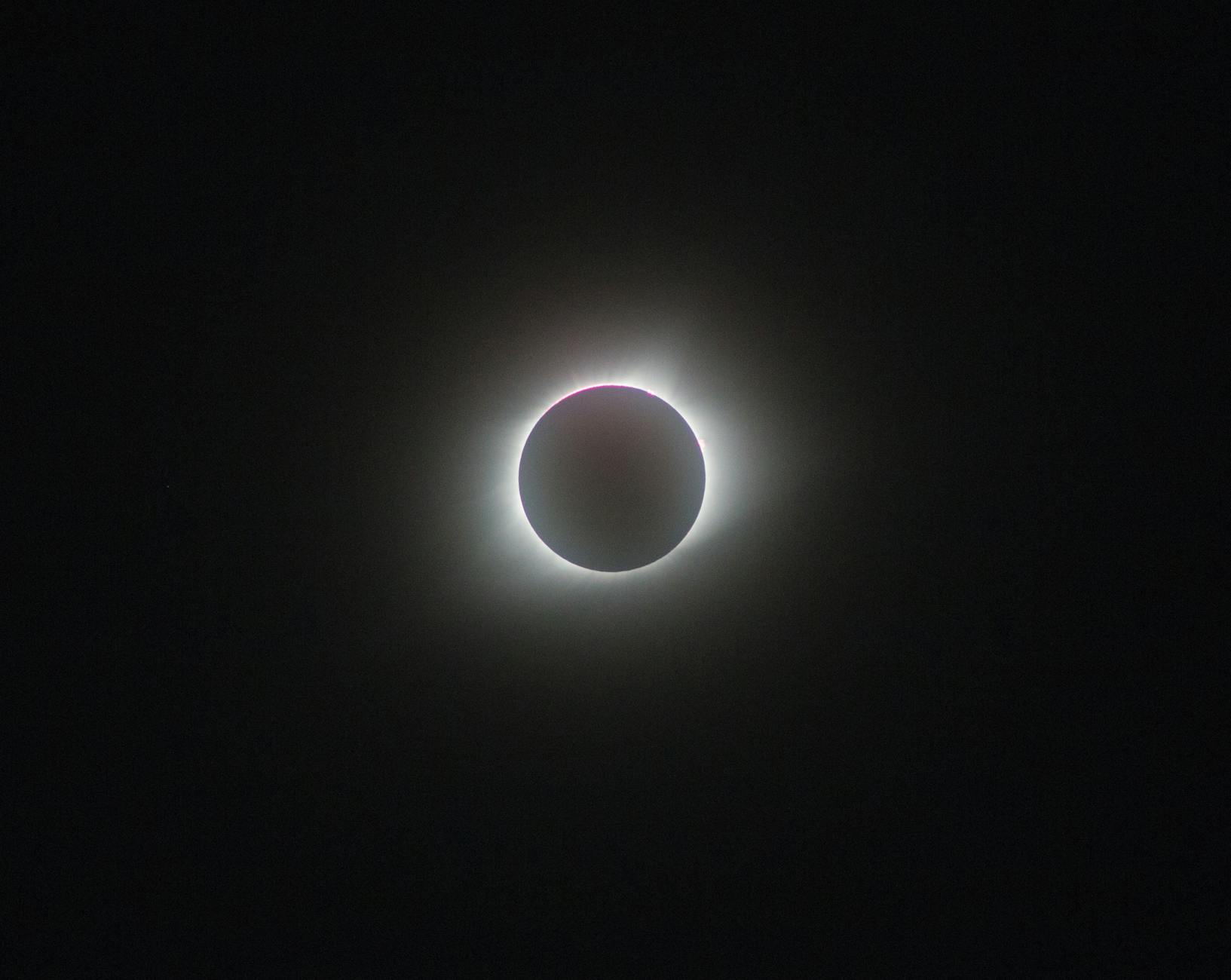
In just 90 days from now (April 8, 2024) the moon will appear to gracefully glide across the solar disc to produce a spectacular solar eclipse! Skies will darken. Air will cool (even more than usual). Perplexed and panicked wildlife will scamper, skip, bite, snap, whine, howl, and chant hymns to the cold and fruitless moon. Meanwhile we humans, the wildest of all life, will gaze in breathless awe at the accursed field of pervasive and light-obscuring cumulonimbus that will hang curse-like above us. Ok, well, perhaps we based that last line on those down-in-the-mouth meteorologists who claim that the probability of cloud cover in Maine on April 8th is approximately 83%. Blah to that. After all, we’re not exactly languishing in a Venusian colony. Our skies could be as clear and cerulean as sea nymph eyes; or at least as clear as an unannotated copy of Tractatus Logico-Philosophicus. We have no idea either way.
What we DO know is that this solar eclipse will happen come hell or high water and we want to help people prepare for this once-in-a-lifetime event. We insist that this last line is hardly hyperbolic. (Lines are always linear). Unlike “storms of the century” that turn up every other December, this solar eclipse is truly a once in a go-around spectacle. Maine’s last total solar eclipse happened on July 20, 1963; the next one visible in Maine won’t occur until May 1, 2079.
From now until April 8th, the Wandering Astronomer will be posting a veritable slew of articles pertaining to every aspect of this eclipse. The articles topic will discuss:
- Why eclipses occur.
- Why they’re rare. (Or are they?)
- What we’ll see and how to see it safely. [Note: this eclipse will not be total here in Greater Portland. 🙁 However, more than 93% of the Sun will be blocked at maximum.
- Why the April 8th eclipse might be the most watched eclipse in world history!
- How to predict future eclipses.
- Eclipse types.
- Historically significant eclipses such as the 1919 eclipse that first provided proof supporting General Relativity and made Einstein’s name synonymous with “genius” and “nifty haircuts.” (Yes, I am bitterly envious of his brain and hair.)
- The Saros Cycle.
- As the moon is slowly moving away from Earth, will solar eclipses ever end? (Yes, but don’t pencil that into your day planner.)
- and much more!
The Wandering Astronomer’s “Eclipse cycle” will careen uncontrollably into the scientific, historical, mathematical (rarely), mystical, spiritual, mythological and supernatural aspects of this eclipse! Please subscribe to join us on this journey.




Leave a Reply